

THUR, FEB 26 | 7:30PM | HAROLD MIOSSI HALL | $41-74
Join us for an inspiring evening with Emmy-nominated actor, author, and former Associate Director of the White House Office of Public Engagement, Kal Penn. Known for his starring roles in Designated Survivor, House, Mira Nair’s The Namesake, the Harold & Kumar franchise, and the Christmas comedy The Santa Clauses for Disney +, Penn also served in the Obama administration, focusing on youth engagement, arts, and public policy. He continues to champion social change through storytelling, education, and public service.
Don’t miss this unique opportunity to hear firsthand about his journey through Hollywood and Washington, and how he uses his platform to drive impact.
Presented in partnership with Cal Poly Center for Service in Action’s Change the Status Quo Social Justice & Service Speaker Series.
Groups of 10 or more: Book your tickets together and save 10%!
Cal Poly Student Tickets Available - Visit Cal Poly Ticket Office to purchase.
This Evening's Moderator: DR. DENISE ISOM
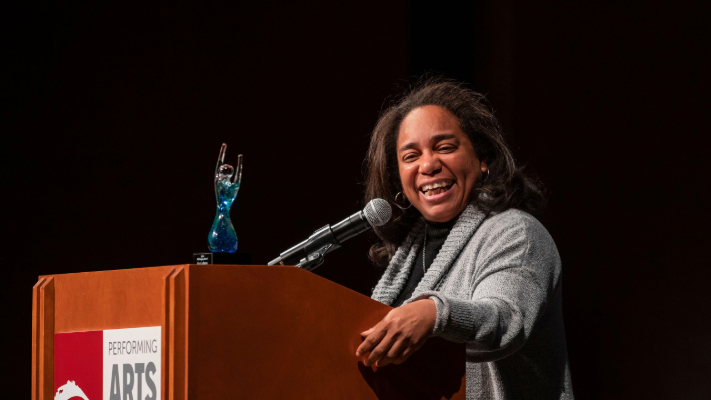
Dr. Denise Isom received her doctorate in Socio-Cultural Anthropology of Education from Loyola University, Chicago and is currently teaching is CLA’s Interdisciplinary Studies Department and is the recently retired Vice President for Diversity and Equity & CDO at Cal Poly. Her Master’s in Curriculum and Instruction with an emphasis in Multicultural Education along with a B.S. in Engineering and B.A. in African American Studies were earned at the University of California at Davis. Dr. Isom’s areas of expertise includes, African American Studies, racialized gender identity, sociology/anthropology of education and whiteness.
Her primary research agenda centers on racialized gender identity in African American children, and she recently co-authored the text, “Multicultural Psychology: Self, Society, and Social Change” from Sage Publications. Her work has been presented at numerous national and international conferences, published in journals such as The Urban Review and The Journal of Race, Equality and Teaching, and in chapters on boy “culture”, Teaching Race, and African American Female Psychology and Identity for the Oxford Handbook of Feminist Multicultural Counseling Psychology.

